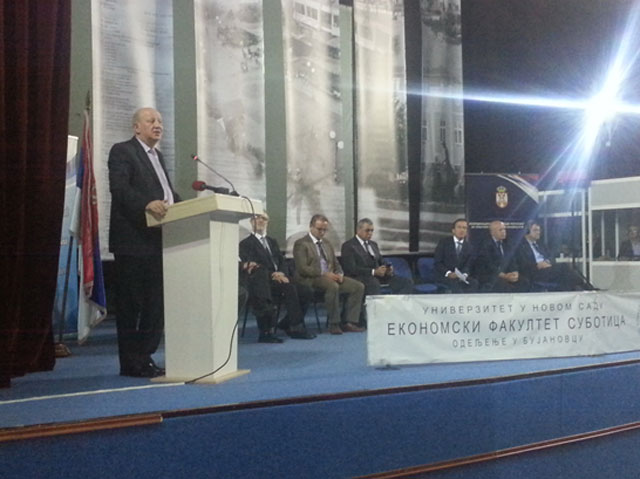
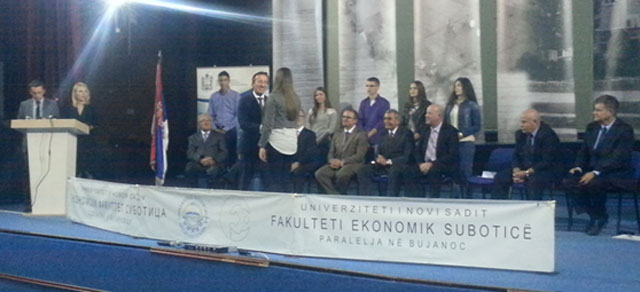
On Monday, October 6, the beginning of a new academic year and the enrollment of the fourth generation of students in the Subotica Faculty of Economics’ Department in Bujanovac was marked at the “Vuk Karadzic” cultural center in Bujanovac.
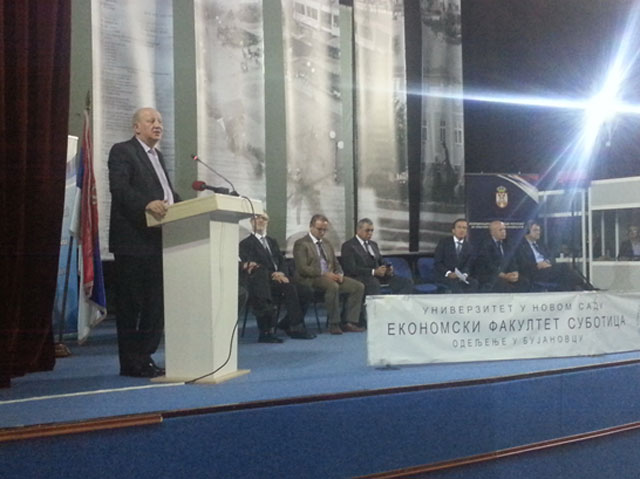
On Monday, October 6, the beginning of a new academic year and the enrollment of the fourth generation of students in the Subotica Faculty of Economics’ Department in Bujanovac was marked at the “Vuk Karadzic” cultural center in Bujanovac.
Professor Zoran Stankovic, President of the Coordination Body of the Government of the Republic of Serbia for the Municipalities of Presevo, Bujanovac and Medvedja, welcomed the fourth generation of students and wished them a successful start of studying. Professor Stankovic said that the construction of a building for the needs of improved operation of the Faculty of Economics’ Department ought to begin at the end of the month, adding that that would be the largest investment in education in the year.
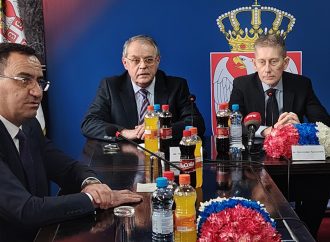
At the ceremony marking the start of the new academic year, freshmen were welcomed by Prof. Zoran Masic, PhD, Secretary of State in the Ministry of Education, Science and Technological Development, Prof. Nenad Vunjak, PhD, Dean of the Faculty of Economics in Subotica, Prof. Miroslav Veskovic, PhD, Rector of the University of Novi Sad, Peter Burkhard, Head of the OSCE Mission to Serbia, Nagip Arifi, Mayor of Bujanovac, Prof. Arber Celiku, PhD, Vice Rector of the University of Tetovo, Galip Beciri, President of the Albanian National Council, and Graeme Tyndall, Manager of the United Nations Office for Project Services (UNOPS ) and the European Progress Program.
It was assessed at the ceremony held at the Cultural Center in Bujanovac that the operation of the said institution of higher education was extremely important for providing the opportunities to young people, the economic development of the region and for building mutual trust.
Prof, Nenad Vunjak, PhD, Dean of the Faculty of Economics, welcomed the new generation of students in Bujanovac and pointed out that the Faculty of Economics offered great opportunities to young people not only in Subotica and Novi Sad , but also in Bujanovac and South Serbia.
Prof. Miroslav Veskovic, PhD, Rector of the University of Novi Sad, said that he had come to Bujanovac for the fourth time to support the students of the Faculty of Economics’ Department. He also told the freshmen that it was important for them to learn and acquire knowledge, as well as to socialize and share their experiences.
On behalf of the Minister of Education, Science and Technological Development, and in the name of the Ministry, State Secretary Prof. Zoran Masic, PhD, supported the operation of the Faculty of Economics’ Department in Bujanovac and wished students a successful start of the new academic year.
Peter Burkhard, Head of the OSCE Mission to Serbia, supported the education of young people at the Faculty’s Department in Bujanovac and said that they would adopt the necessary skills there, which were important for their further development and career.
Nagip Arifi, Mayor of Bujanovac, said that the students would have better working conditions the following year, which would be supported by the international community, adding that the municipality of Bujanovac made great efforts so that the students would have the adequate facility for studying.
Galip Beciri, President of the Albanian National Council, pointed to the need of finding jobs for the students that would finish studying at the Faculty of Economics the following year and added that that would be a positive sign for all future students of the Faculty’s Department.
Graeme Tyndall, Manager of the United Nations Office for Project Services (UNOPS) and the European Progress Program, conveyed the greetings of Michael Davenport, Head of the EU Delegation to Serbia, and pointed out that it was extremely important that Bujanovac, by having opened the Faculty of Economics’ Department, became a university city.
The attendees of the event handed matriculation books to the freshmen, emphasizing the importance of higher education in South Serbia for further development and progress of that part of the Republic of Serbia.
69 students, whose studying is funded from the budget, are enrolled in the Department every year. Classes are held in two languages: in the Serbian language for students from the Serbian and Roma communities, while students from the Albanian community, during the four years of education, attend classes in Albanian.
Source: Coordination Body